
Building your programme · Guide
Parents often assume one to one is the gold standard. Here are the six questions they ask most about small group tuition, and calm, honest answers you can give.
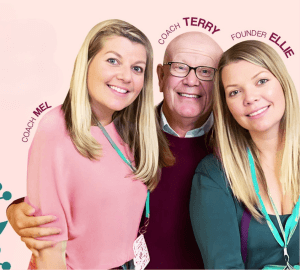 The Business of Tutoring teamEllie, Mel, Terry and Kelly
In this article
“So it’s not one to one? Won’t my child get less attention?”
If you’ve ever offered group tuition, you’ll have heard this question. And perhaps a small part of you has wondered the same thing. Most of us were brought up to see 1 to 1 tuition as the gold standard.
After years of running both 1:1 lessons and group programmes, and supporting hundreds of tutors to make the same move, we’ve seen something different: for many children, a well-designed small group works better than 1:1. Here are the six questions parents ask most, and how to answer each one calmly and honestly.
Myth 1: “1:1 tuition is more personalised”
In a typical 1:1 lesson, the student arrives, the tutor explains, the student practises, the tutor gives feedback and the session ends. Then a week passes with little contact. Progress happens in one-hour bursts.
A well-designed group programme spreads learning across the week:
- Self-study between sessions. Short recorded explanations students can pause and rewatch, so live time is spent applying ideas.
- Access to the tutor. Students can message when they’re stuck and get a quick voice note or screen recording while the question is fresh.
- Learning together. Live sessions focus on discussion, practice and feedback, with students learning from each other as well as from you.
That’s what Charley found when she built her GCSE English programme: her students progressed faster in groups than they had in 1:1. You can read Charley’s story.
Personalisation isn’t about undivided attention for 60 minutes. It’s about the right support at the right time.
Myth 2: “My child is reluctant already. Won’t a group make it worse?”
Often the opposite happens. In 1:1 lessons every question and every silence is aimed at one child, which can feel intense, especially for anxious children or those who find the subject hard.
In a small group the attention is shared. Children can listen before they join in, and they see that other capable students find the same things tricky. That takes away a lot of the embarrassment. Activities such as games, pair work and breakout rooms make sessions feel less like extra lessons and more like something they look forward to.
Myth 3: “Surely 1:1 is better value?”
Look at the total cost and the progress, not the price per hour.
- Weekly 1:1 tuition: commonly £30 to £50 an hour, often for 30 to 40 weeks a year, which can add up to £1,200 to £2,000 or more.
- A structured group programme: often £400 to £800 for 8 to 12 weeks, with a clear curriculum, recorded content, support between sessions and a defined outcome.
Because a programme is built around one goal and a fixed timeframe, children engage more than once a week and the work has a clear end point. Value is about outcomes and time, not hourly rate.
Myth 4: “Group learning doesn’t work as well as 1:1”
When groups are designed well, they bring benefits a single student can’t get on their own:
- Peer explanation. Explaining an idea to someone else strengthens understanding for both children.
- Different approaches. Hearing how others tackle a problem deepens understanding.
- Motivation and accountability. Students don’t want to let their group down.
- Misconceptions surface. Discussion brings misunderstandings into the open, where you can address them.
We see this across our community, from Tom’s maths groups to Jean’s programme for ADHD families. For more on the design side, read how to make group results better than 1:1.
Myth 5: “Face to face is better than online”
Online small group tuition has real advantages for families: no travel, the chance to choose a specialist tutor rather than whoever is local, and a parent nearby while their child learns at home. For learning, sessions can be recorded for review, resources are shared instantly, and tools such as polls, chat and shared documents give every child a way to take part.
What matters most isn’t the location. It’s the quality of the teaching and the design of the programme.
Myth 6: “Won’t my child get lost in a group?”
Good facilitation makes sure they don’t:
- differentiated tasks, so everyone works at the right level
- structured turn-taking, such as think-pair-share, so every voice is heard
- breakout rooms for extra support when it’s needed
- quieter ways to take part, like the chat or a shared document
- individual check-ins and feedback between sessions
How to answer parents with confidence
If you’re moving from 1:1 to groups, these points aren’t just answers for parents. They’re reasons to feel confident in what you’re offering. When parents ask why they should choose your group over 1:1:
- Acknowledge the question. “That’s a very fair question. Most of us grew up thinking 1:1 was best.”
- Explain how support works. “My programme is designed to give more support across the week, not less.”
- Give an example. “If your child gets stuck on Tuesday evening, they don’t wait until Saturday. They can message me and get help.”
- Share results from your own students or client stories.
- Talk about value. “It’s a fixed programme with a clear outcome, rather than weekly lessons with no end date.”
If you’re planning that move now, our step-by-step guide on how to move from 1:1 tuition to group tuition walks you through it, and the mindset shift from 1:1 to groups is worth reading alongside it.
Questions parents ask about group and 1:1 tuition
Is group tuition or 1 to 1 tuition better for my child?
For many children a well-designed small group is the better choice. A group of four to six students with one clear goal adds peer learning, accountability and confidence, while a good tutor still gives each child individual feedback. One to one tuition can suit a child who needs very specific, short-term support.
Will my child get less attention in a group?
In a well-run small group, attention is spread across the week rather than squeezed into one hour. Students learn from recorded content, can message their tutor between sessions, and work with peers in live sessions, so support arrives when it is needed.
Is small group tuition better value than 1:1 tuition?
Often, yes. A structured 8 to 12 week group programme usually costs less in total than a year of weekly 1:1 lessons, and because it is built around one outcome, progress tends to be quicker.
Does online group tuition work as well as face to face?
It can work very well. Online groups remove travel, make recordings and shared resources easy, and give quieter children more ways to take part, through chat, polls and small breakout rooms.
How many children should be in a tuition group?
Four to six is a good size for most subjects. It is small enough for every child to be seen and heard, and large enough for real discussion. The Education Endowment Foundation’s research finds small group tuition adds an average of four months’ extra progress over a year, and that impact drops once groups grow beyond six or seven (EEF Teaching and Learning Toolkit).
Your next step
Want to build a group programme parents love?
The 2 Hour Tutor Programme is our six-month, CPD-accredited programme for experienced tutors and teachers moving from 1:1 lessons to group programmes. We build it with you, step by step, with weekly live coaching from our team.
Explore the programmeBook a conversation with Mel
Not quite ready? Start with our free Group Tuition Guide.