
How Long Does It Take to Launch a Profitable Group Tuition Programme? (The Honest Timeline)
From Idea to First Sale: What to Realistically Expect
“How long will this actually take?”
If you’re considering launching a group tuition programme, this is probably one of your biggest questions.
And I completely understand why. You might be:
- Still teaching full-time and wondering when you’ll find time to build this
- Running 1:1 sessions and worried about losing income during the transition
- On maternity leave (like Charley was) and needing to make this work quickly
- Just desperate to leave teaching and wanting to know if this is realistic
The truth? It depends on where you’re starting from.
But I can give you a realistic timeline based on helping hundreds of tutors through this exact process—and show you what actually happens in each phase.
Because the last thing you need is another vague “it takes as long as it takes” answer. You need specifics.
Let me break down the five phases from idea to profitable programme, what actually happens in each one, and how long each typically takes based on your starting point.
Your Starting Point Matters
Before we dive into the timeline, let’s acknowledge that your journey will look different depending on where you are right now:
Scenario A: You’re already running a successful 1:1 tutoring business
- You have students and income
- You understand your niche (even if not perfectly defined)
- You have some marketing presence (social media, email list, or word-of-mouth referrals)
- Timeline: 10-16 weeks to first profitable cohort
Scenario B: You’re teaching full-time and haven’t started tutoring yet
- You need to figure out your niche from scratch
- You have no existing students or audience
- You’re building this around a full-time job
- Timeline: 16-24 weeks to first profitable cohort
Scenario C: You left teaching recently and need income quickly
- You have teaching experience but no tutoring business yet
- You need to generate income relatively fast
- You can dedicate significant time to this
- Timeline: 12-18 weeks to first profitable cohort
These aren’t rigid rules—Tom and Charley both had different timelines based on their circumstances. But they give you realistic expectations.
Now let’s break down what happens in each phase.
Phase 1: Choose Your Niche, Messaging, and Programme Structure (1-5 Weeks)
What actually happens in this phase:
This is the foundation phase where you get crystal clear on:
- Who exactly you’re serving (not “all ages” or “anyone who needs maths help”)
- What specific problem they have that you’ll solve
- What transformation they’ll achieve through your programme
- How long your programme will run (8-12 weeks is typical)
- What you’ll charge (£400-1,000 depending on your niche and outcomes)
- How you’ll deliver support (hybrid model with video content, live group sessions, and individual feedback)
If you’re already running 1:1 sessions: 1-2 weeks
You already know who you work with and what they need. This phase is about refining your niche and designing the structure.
Questions you’ll answer:
- Which of my current students represent my ideal client?
- What’s the common problem I solve for them?
- How can I package this into a defined programme with clear outcomes?
You’re not starting from scratch—you’re crystallising what you already know into a structured offer.
If you’re still teaching and new to tutoring: 4-5 weeks
You need to explore and validate your idea before committing.
Questions you’ll answer:
- What age group do I most enjoy teaching?
- What specific challenge do students in that group face?
- Is there demand for help with this problem?
- What outcome would parents pay for?
- How can I validate this without quitting my job first?
This takes longer because you’re testing assumptions, researching your market, and building confidence in your niche choice.
Common mistakes that slow this phase down:
- Trying to serve everyone (which means serving no one effectively)
- Overthinking until you have the “perfect” niche
- Designing every detail of your programme before validating demand
- Waiting for complete certainty before moving forward
Jean spent time here working through her niche clarity. She had a breakthrough when she realised she was writing about her own family’s experience with ADHD—and that became her niche: grandparents of ADHD children.
What you should have by the end of this phase:
- Clear niche definition
- Programme name and core outcome
- Length (weeks) and price point
- Basic structure of what you’ll deliver
- Confidence that people actually want this
Phase 2: Build Your Authority & Audience Ahead of Launch (4-8 Weeks)
What actually happens in this phase:
This is where you become visible to your ideal clients and build credibility before you ask them to buy.
You’re not selling yet. You’re establishing yourself as the go-to expert for your specific niche.
If you already have an audience (email list, social following, existing students): 4 weeks
You can start “seeding” your programme idea immediately:
- Share valuable content related to your programme topic
- Start conversations about the challenges your programme will solve
- Build anticipation for what you’re creating
- Gauge interest through engagement
You’re leveraging existing relationships and trust.
If you’re building from scratch with no audience: 6-8 weeks
You need to:
- Identify where your ideal clients hang out (Facebook groups, school forums, local networks)
- Create content that showcases your expertise
- Start building an email list (even 50-100 people is enough to launch)
- Engage authentically without being salesy
The goal isn’t to build a massive following. It’s to attract 100-300 people who are genuinely interested in what you offer.
What this looks like in practice:
Week 1-2: Define your content strategy. What will you share? Where? How often?
Week 3-4: Start posting valuable content consistently. Answer questions. Be helpful. Show your expertise.
Week 5-6: Engage with your growing audience. Start conversations. Learn what they struggle with.
Week 7-8: Plant seeds about your upcoming programme. “I’m creating something to help with exactly this problem…”
Common mistakes that slow this phase down:
- Trying to be everywhere (pick 1-2 platforms and focus)
- Creating content without strategy (post with purpose, not just to post)
- Being too salesy too soon (build trust first, sell later)
- Perfectionism preventing you from posting anything
- Waiting for a huge following before launching (you don’t need thousands of followers)
This is where having a clear message matters. If you’re vague about who you help and how, your audience won’t grow. If you’re specific and valuable, the right people will find you.
What you should have by the end of this phase:
- 100-300 engaged potential clients aware of you
- Consistent content showing your expertise
- Conversations happening around the problem you solve
- Some “warm” prospects interested in your upcoming programme
- Basic marketing infrastructure (simple landing page, email collection)
Phase 3: Launch Your Programme (3-4 Weeks)
What actually happens in this phase:
This is where you actually sell your programme and enrol your first students.
There are two main approaches:
Option 1: Elaborate Launch (4 weeks)
- Host a free workshop or webinar series
- Provide massive value upfront
- Open enrolment at the end
- Close enrolment after set period
- Best for: Tutors with an engaged audience ready to launch to multiple people
Option 2: Low-Key Launch (3 weeks)
- Direct outreach to warm prospects
- Individual conversations or small group presentations
- Send programme details PDF to interested families
- Fill spots through personal invitation
- Best for: Tutors launching their first pilot cohort with 3-5 students
Week 1: Pre-Launch
- Finalise your programme details and pricing
- Create your sales materials (simple one-page overview is enough)
- Prepare to answer common questions and objections
- Reach out to your warmest prospects
Week 2-3: Active Enrollment
- Open enrolment (publicly or to select group)
- Have sales conversations (they’re actually enrolment conversations—you’re seeing if it’s a fit)
- Answer questions, address concerns
- Follow up with interested families
Week 4: Close and Prepare
- Close enrolment (even if you haven’t filled all spots—scarcity is real)
- Celebrate your enrolled students!
- Schedule kick-off call
- Begin content creation for your first sessions
Critical mindset shift for this phase:
You don’t need to have every session planned before you launch. You need:
- Clear programme outline (8-12 session topics)
- Compelling transformation promise
- Confidence in your delivery
That’s it. Create content 2-3 weeks ahead of where your group is. This lets you learn with your first cohort and adjust based on real needs.
Common mistakes that slow this phase down:
- Overthinking your sales materials (simple beats perfect)
- Waiting to launch until you’ve created all content (you don’t need this!)
- Being afraid to have sales conversations (remember: you’re helping families, not pushing something they don’t want)
- Not following up with interested people (most sales happen in the follow-up)
- Giving up after the first “no” (not everyone is your ideal client—and that’s okay)
Charley got her first sale within weeks of joining the programme. Not because she was special, but because she followed the process and took action despite fear.
What you should have by the end of this phase:
- 3-8 enrolled students (enough for your first cohort)
- Confirmed start date
- Payment received (or payment plan set up)
- Kick-off call scheduled
- Clear plan for your first 2-3 weeks of content
Phase 4: Deliver Your Programme (8-12 Weeks)
What actually happens in this phase:
This is where the magic happens—you’re finally teaching! But differently than before.
Week 1: Kick-Off Call
- Welcome students and parents
- Set expectations and build community
- Get students excited
- Address any concerns
Weeks 2-12: Programme Delivery
- Create content 2-3 weeks ahead
- Deliver live group sessions
- Provide individual feedback via voice notes/screen recordings
- Adjust based on what’s working
- Celebrate wins with your group
What this looks like in terms of time:
Content creation: 3-4 hours per week (decreases as you build your library)
Live sessions: 1.5-2 hours per week (90 minutes teaching + 30 minutes buffer)
Individual feedback: 2-3 hours per week (15-minute feedback for 8 students)
Admin/messaging: 1-2 hours per week
Total: 8-10 hours per week
Compare this to running 8 different 1:1 sessions (8 hours teaching + 8 hours planning/feedback = 16 hours minimum).
What you’re learning during delivery:
- What content lands best with students
- Where students get stuck (so you can add more support)
- What pace works for your group
- How to facilitate group discussions effectively
- What parents value most in your programme
Every cohort you run teaches you how to make the next one even better.
Common mistakes during delivery:
- Over-complicating content (simpler is often more effective)
- Not asking for feedback until the end (check in regularly)
- Trying to personalise everything (you can’t—and you don’t need to)
- Not celebrating progress (make wins visible to build momentum)
- Creating all content before seeing what students actually need
What you should have by the end of this phase:
- Successfully delivered first cohort
- Testimonials and results from students
- Refined programme content
- Clear understanding of what works
- Confidence to run it again (and charge more)
Phase 5: Optimise, Scale, and Repeat (Ongoing)
What actually happens in this phase:
This is where your business really takes off. You’re no longer building from scratch—you’re refining and scaling what works.
After Your First Cohort:
Immediate actions:
- Gather feedback and testimonials
- Update programme content based on learnings
- Calculate your actual profit and time investment
- Plan your next launch date
Optimisation focus:
- Which parts of your programme got the best results?
- Where did students struggle? (Add more support there)
- What surprised you? (Lean into unexpected wins)
- How can you streamline delivery even more?
Next Launch:
- Run it again with new cohort (2-3 months after first ends)
- Charge more (you now have proof it works)
- Fill spots faster (you have testimonials and referrals)
- Teach with more confidence
Scaling options:
- Run two groups simultaneously (double your income for similar hours)
- Create a more advanced follow-on programme
- Add one-off masterclasses or workshops
- Train another tutor to deliver your programme (if you want)
This is the point where Charley was on track to exceed her teaching salary. Not from her first cohort, but from having a proven programme she could run repeatedly with new students.
What this phase looks like over 6-12 months:
Months 1-3: Run first cohort, optimise content
Months 4-6: Launch second cohort (improved version), increase price
Months 7-9: Run two groups simultaneously, consistent income
Months 10-12: Established programme, predictable launches, sustainable business
You’re no longer hustling—you’re operating.
What success looks like at this stage:
- Consistent monthly income from programme cohorts
- Work-life balance you actually enjoy
- Students getting excellent results
- Referrals and word-of-mouth marketing
- Time to breathe, plan, and improve
The Real Timeline: Putting It All Together
Let’s map this out for the three scenarios:
Scenario A: Established 1:1 Tutor
- Phase 1: 2 weeks
- Phase 2: 4 weeks
- Phase 3: 3 weeks
- Phase 4: 10 weeks
- Total to first cohort completion: ~19 weeks (4.5 months)
- First profitable sale: Week 9
Scenario B: Full-Time Teacher, New to Tutoring
- Phase 1: 5 weeks
- Phase 2: 8 weeks
- Phase 3: 4 weeks
- Phase 4: 10 weeks
- Total to first cohort completion: ~27 weeks (6.5 months)
- First profitable sale: Week 17
Scenario C: Recently Left Teaching, Building Quickly
- Phase 1: 3 weeks
- Phase 2: 6 weeks
- Phase 3: 3 weeks
- Phase 4: 10 weeks
- Total to first cohort completion: ~22 weeks (5.5 months)
- First profitable sale: Week 12
The honest truth:
Most tutors see their first profitable sale within 8-16 weeks of starting the process, depending on their starting point.
Most tutors run their first complete cohort within 5-7 months.
Most tutors replace their teaching salary within 6-12 months of committing to this model.
Tom did it within 6 months. Charley did it within 6 months. Jean successfully launched despite starting from “the pit of despair”.
None of them had perfect circumstances. They just followed the process.
What Actually Speeds Things Up (And What Slows You Down)
Things that accelerate your timeline:
- Following a proven framework instead of figuring it out alone
- Taking imperfect action instead of planning forever
- Getting support from someone who’s done this
- Starting with a pilot instead of waiting for perfection
- Having accountability to keep you moving forward
Things that slow you down:
- Trying to create everything before launching (you don’t need this)
- Analysis paralysis on niche choice (pick one and test it)
- Perfectionism preventing you from posting or reaching out
- Comparison to tutors who are further ahead than you
- Isolation trying to figure it all out yourself
The tutors who succeed fastest aren’t the most talented or experienced. They’re the ones who take consistent action despite fear and get support when they’re stuck.
“But I Don’t Have Time for All This…”
I hear this constantly, especially from teachers still in the classroom.
Here’s the truth: You don’t need huge blocks of time. You need consistent small actions.
Phase 1 (Niche & Structure): 3-4 hours per week for 3-5 weeks
Phase 2 (Audience Building): 5-6 hours per week for 6-8 weeks
Phase 3 (Launch): 8-10 hours per week for 3-4 weeks
Phase 4 (Delivery): 8-10 hours per week for 10-12 weeks
If you’re teaching full-time, can you carve out 5-6 hours per week? Maybe early mornings, evenings twice a week, and a few hours on weekend?
It’s tight. But teachers have done this while raising young children. You can do it whilst teaching full-time.
The question isn’t “do I have time?” The question is “is this important enough to make time?”
Your Next Steps
If you’re reading this thinking “okay, I can see the timeline—but how do I actually start?” here’s what to do:
Understand the full framework:
Read about how to transition from 1:1 to group tuition—the practical steps that work.
Make the mindset shift:
Explore thinking like a business owner instead of staying in teacher mode.
See why this model works:
Learn why group tuition gets better results than 1:1—for students and for you.
Read real success stories:
- Tom’s 6-month journey from teacher to business owner
- Charley’s transformation whilst on maternity leave
- Jean’s success despite self-doubt and previous disappointments
Get practical tools:
Download the free Group Tuition Guide with templates for each phase of this process.
Join a live workshop:
Come to our next free workshop where we walk through Phase 1 together in real-time.
Get hands-on support:
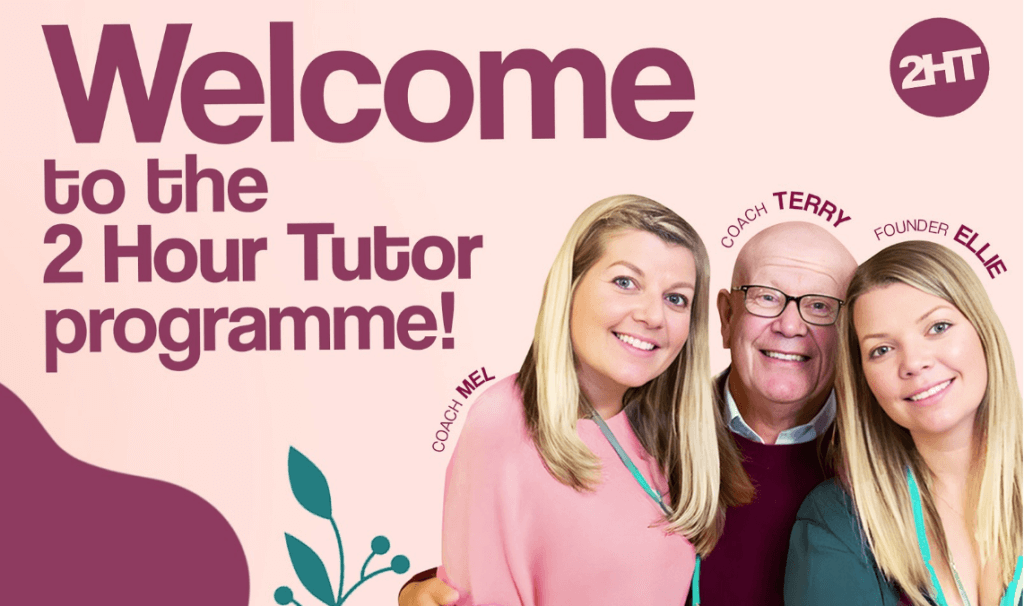
If you want to move through these phases faster with expert guidance, explore the 2 Hour Tutor Programme—the same programme that helped Tom, Charley, and Jean succeed.
Final Thoughts: The Timeline Is Flexible, But the Process Works
Here’s what I want you to remember:
The timeline I’ve shared isn’t rigid. Your circumstances are unique. Life happens. Some phases might take longer; others might move faster.
But the process—the five phases from idea to profitable programme—that part is proven.
Hundreds of tutors have followed this framework and built successful group tuition businesses. Some did it in 4 months. Some took 8 months. Some juggled it around full-time jobs and young children.
The timeline varies. The outcome doesn’t.
If you follow the process, it works.
So the question isn’t “will this work for me?” The question is “when will I start?”
Because every week you wait is another week of staying stuck in unsustainable 1:1 sessions, or staying in a teaching job that’s draining you, or wondering if there’s another way.
There is another way. And you now know exactly how long it takes.
The only question left is: are you ready to begin?
Ellie xx
